Hijama (Cupping Therapy): A Practical Guide for UK Patients
Hijama (Cupping Therapy): A Practical Guide for UK Patients
Hijama, also known as cupping therapy, is one of the oldest recorded forms of complementary treatment. Patients ask about it for many reasons: muscular tension after long working weeks, recovery from training, persistent neck and shoulder discomfort, or simply as part of a regular wellbeing routine. This guide is written for anyone considering hijama in the UK, and aims to give a clear, measured picture of what the treatment involves, who it suits, and what to expect on the day.
What is hijama?
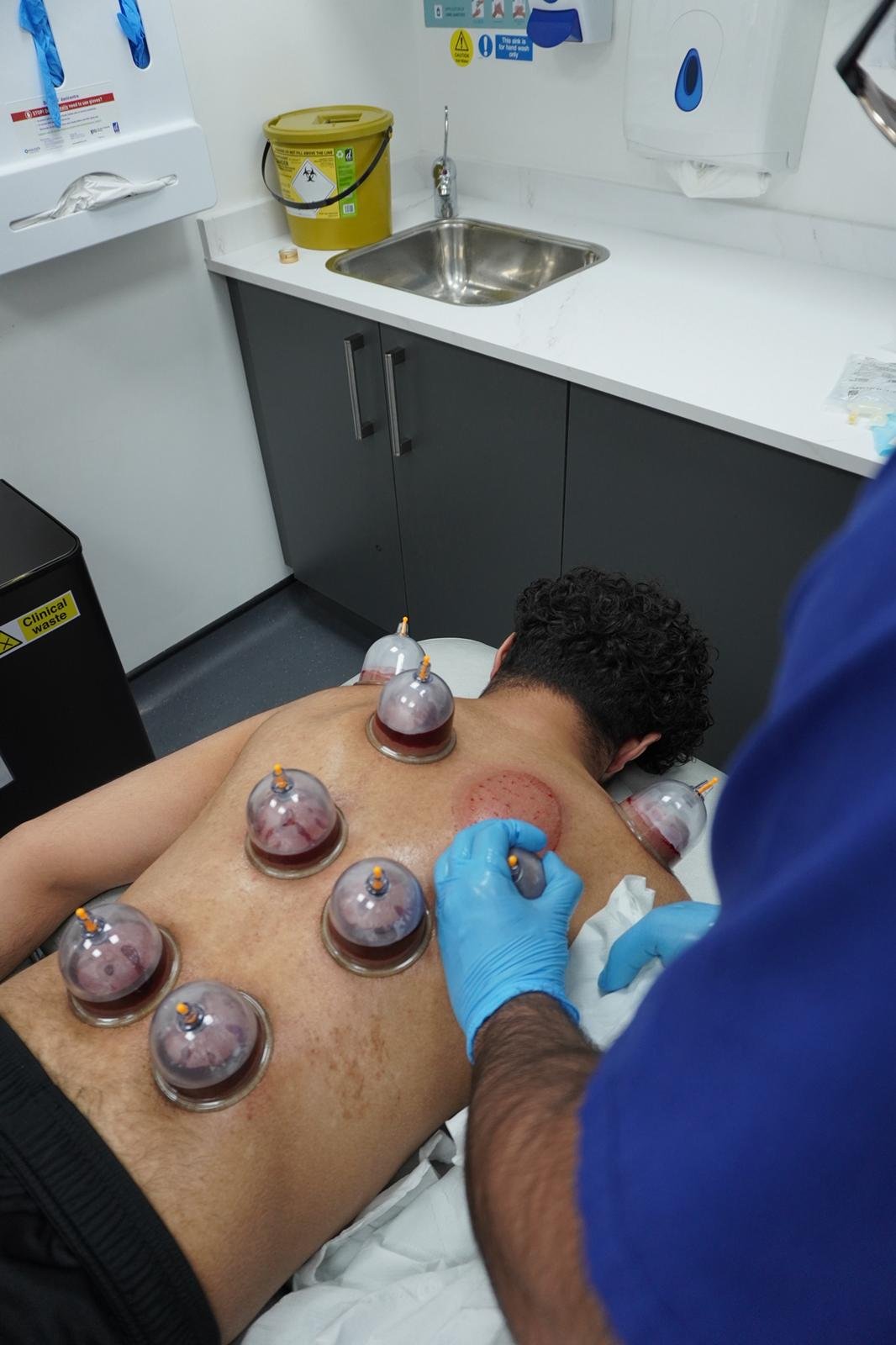
Hijama is the practice of placing specially designed cups onto the skin to create a vacuum. The suction draws the skin and underlying tissue gently upwards into the cup. Practitioners use either dry cupping, where suction is used on its own, or wet cupping (hijama proper), where suction is combined with very small, superficial incisions so that a small amount of blood is drawn into the cup.
The practice has a long and varied history. Versions of cupping appear across ancient Egyptian, Greek, Chinese and Middle Eastern medical traditions, and the technique has remained in continuous use for thousands of years. Today, hijama is most commonly associated with the Islamic tradition, where it is part of the prophetic sunnah, but it is widely practised by patients of all backgrounds in the UK and across Europe.
Wet cupping versus dry cupping
Although they are often discussed together, wet and dry cupping are two distinct techniques. Understanding the difference helps you have a sensible conversation with your clinician about which, if either, is suitable for you.
Dry cupping
In dry cupping, cups are applied to the skin and a vacuum is created either with a hand-pump or, traditionally, with a brief flame inside the cup. The skin is drawn into the cup and held there for several minutes. Nothing breaks the surface of the skin. Patients typically report a pulling sensation followed by a noticeable warmth in the area. Circular marks, which usually fade over a few days, are normal and expected.
Wet cupping (hijama)
Wet cupping begins in the same way: cups are applied to draw the skin up. The cups are then removed, and the practitioner uses a sterile blade to make very small, shallow scratches on the surface of the skin. The cups are reapplied over the same area, and a small amount of blood is drawn into the cup. The whole process is carefully controlled and the volume of blood drawn is modest. Single-use blades and cups, or appropriately sterilised equipment, are essential.
Why people choose hijama
Patients come to cupping for a wide range of reasons. The most common include:
- Persistent muscular tension, particularly across the back, shoulders, and neck
- Tension-type headaches and stress-related symptoms
- Aches and stiffness associated with desk work or repetitive physical activity
- Recovery support after sport or training
- General wellbeing and a sense of feeling 'reset' after a demanding period
- Following a regular spiritual or sunnah-inspired routine
It is worth being honest about expectations. The evidence base for cupping is mixed. Some studies suggest it may help with certain pain conditions, including chronic neck and lower back pain, but high-quality, large-scale trials are limited and the picture varies depending on the condition. We treat cupping as supportive care rather than a stand-alone treatment for medical conditions, and we are clear with patients when something is best addressed through standard medical pathways instead.
What to expect at the appointment
A first hijama appointment at a properly run clinic typically follows a calm, considered sequence:
- Consultation. We discuss your reasons for considering treatment, your symptoms, your relevant medical history, any medications you take (particularly blood-thinners), and your goals. We also confirm whether dry cupping, wet cupping, or neither, is appropriate.
- Preparation. The treatment area is cleaned and marked. If wet cupping is going ahead, this is where consent is reconfirmed and the sterile-field set-up is completed. All equipment in contact with skin or blood is either single-use or appropriately sterilised.
- Cupping. Cups are applied and held in place for several minutes. For dry cupping, this is the entire treatment phase. For wet cupping, the cups are then removed, small superficial scratches are made, and the cups are reapplied briefly.
- Aftercare and review. Marks, mild soreness, or slight light-headedness are normal afterwards. We dress any sites where needed, give written aftercare advice, and confirm what to do if you have any concerns at home.
A single-area dry cupping session can be over in around 30 minutes, including consultation. A full-body or bespoke hijama appointment may take 60 to 75 minutes or more, depending on the plan agreed at consultation.
Aftercare
Most people return to their usual routine the same day. A few practical points help recovery and reduce the risk of any complications:
- Keep wet-cupping sites clean and covered for the first 24 hours as advised
- Avoid swimming pools, saunas, and very hot baths for 24 to 48 hours
- Drink plenty of water and have a proper meal afterwards
- Avoid strenuous exercise on the same day, particularly if you feel a little tired
- Expect circular bruising or discolouration where the cups were placed; this usually fades over several days
If you develop spreading redness, increasing pain, a fever, or any sign of infection at a wet-cupping site, contact us or your GP promptly. These reactions are uncommon when treatment is performed cleanly, but it is important to know what to look for.
Who should be especially careful, or avoid cupping
Hijama is not appropriate for everyone. We screen carefully for the following before recommending wet cupping in particular:
- Pregnancy
- Anaemia or recently low iron stores
- A bleeding or clotting disorder, or use of blood-thinning medication (including warfarin, apixaban, rivaroxaban, edoxaban, and others)
- Active skin disease over the proposed treatment area
- A history of fainting with needles or blood
- Significant uncontrolled medical conditions where another assessment should come first
If any of these apply, it does not necessarily mean treatment is off the table, but it does mean we have a more careful conversation, and sometimes recommend a review with your GP first.
Safety and hygiene: what to look for in a clinic
Cupping, particularly wet cupping, is a procedure that breaks the surface of the skin. The standards expected of any clinic offering it should be the same as for any minor procedure. When choosing a practitioner, it is reasonable to expect:
- Treatment in a clinical setting, not a domestic one
- Single-use blades, lancets, and cups for wet cupping (or appropriately sterilised equipment where reusable items are used)
- Proper hand hygiene, gloves, and a sterile-field approach for wet cupping
- A clear consultation before treatment and written aftercare advice afterwards
- Clinicians who can explain what they are doing, why, and what to expect
At Sadiqi Medical Centre, our hijama and cupping sessions are delivered by trained clinicians in a clean private clinic on Lea Bridge Road. We take the same approach to hijama as we do to every procedure: careful assessment, clear consent, sterile technique, and honest conversations about what cupping can and cannot do.
Is hijama right for you?
For many patients, cupping is a useful part of a wider wellbeing routine, particularly when expectations are realistic and the practitioner is honest about what the treatment can offer. For others, particularly if there is an underlying medical issue that needs investigation, the right starting point is a standard medical assessment, not cupping.
The simplest way to know is to come in for a short consultation. We can talk through your symptoms, your goals, and any relevant history, and either book you in for an appropriate session or signpost you to a better-fitting alternative.
Read more about our hijama service or get in touch to discuss whether hijama might suit you.